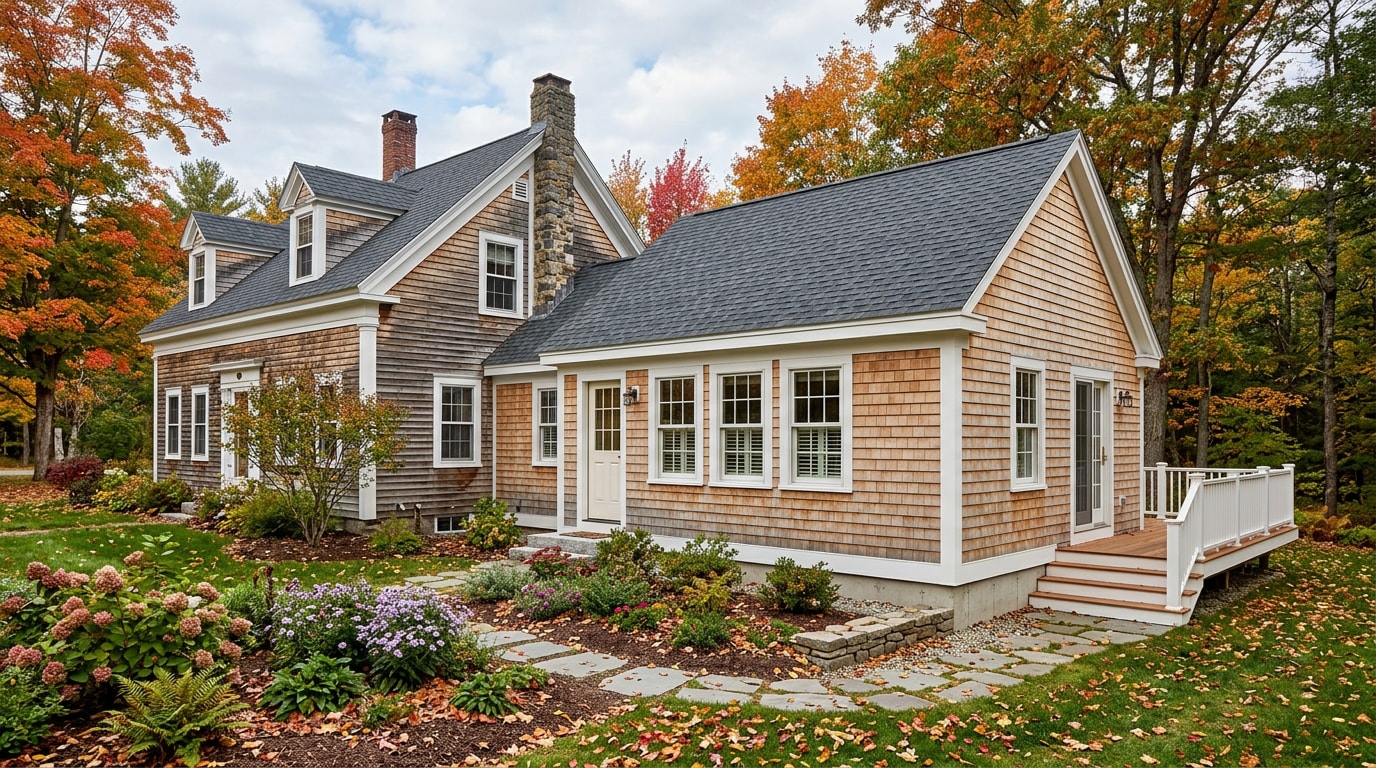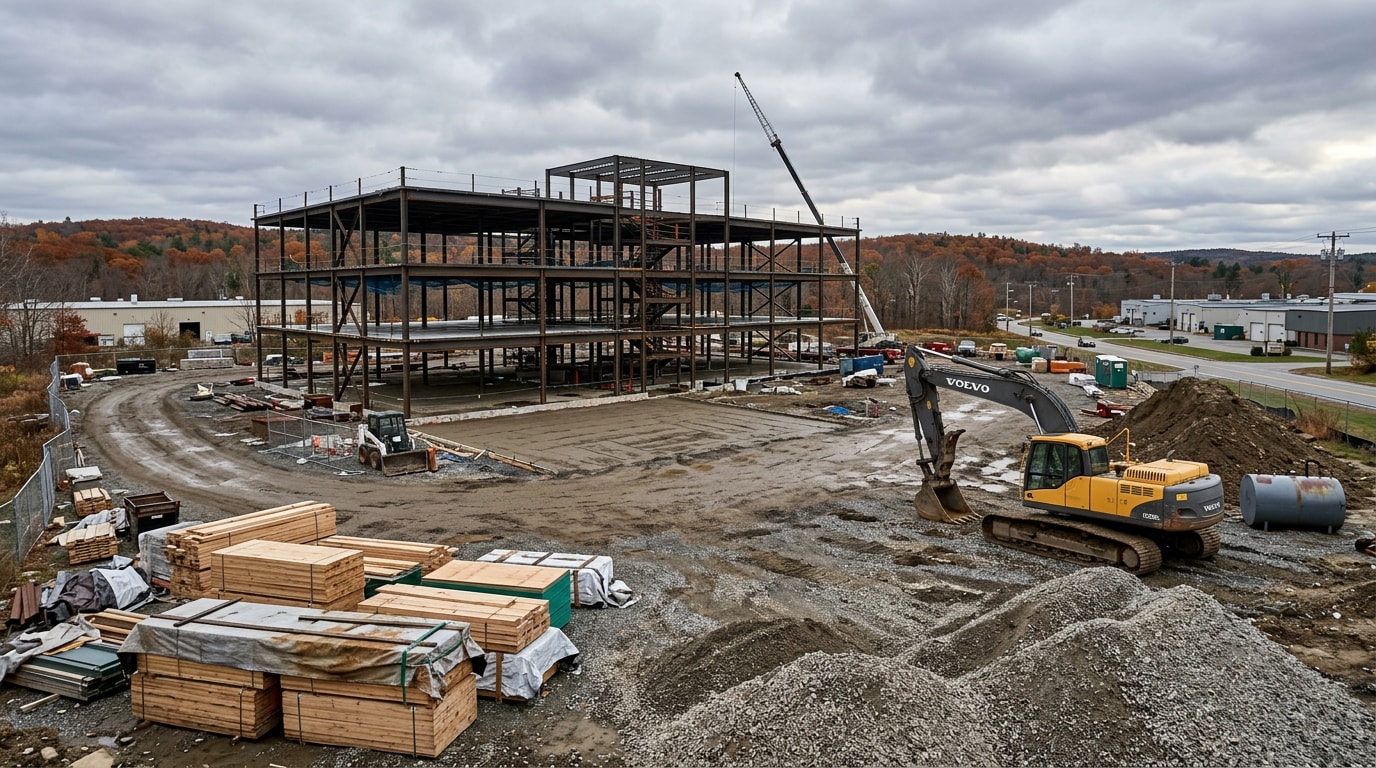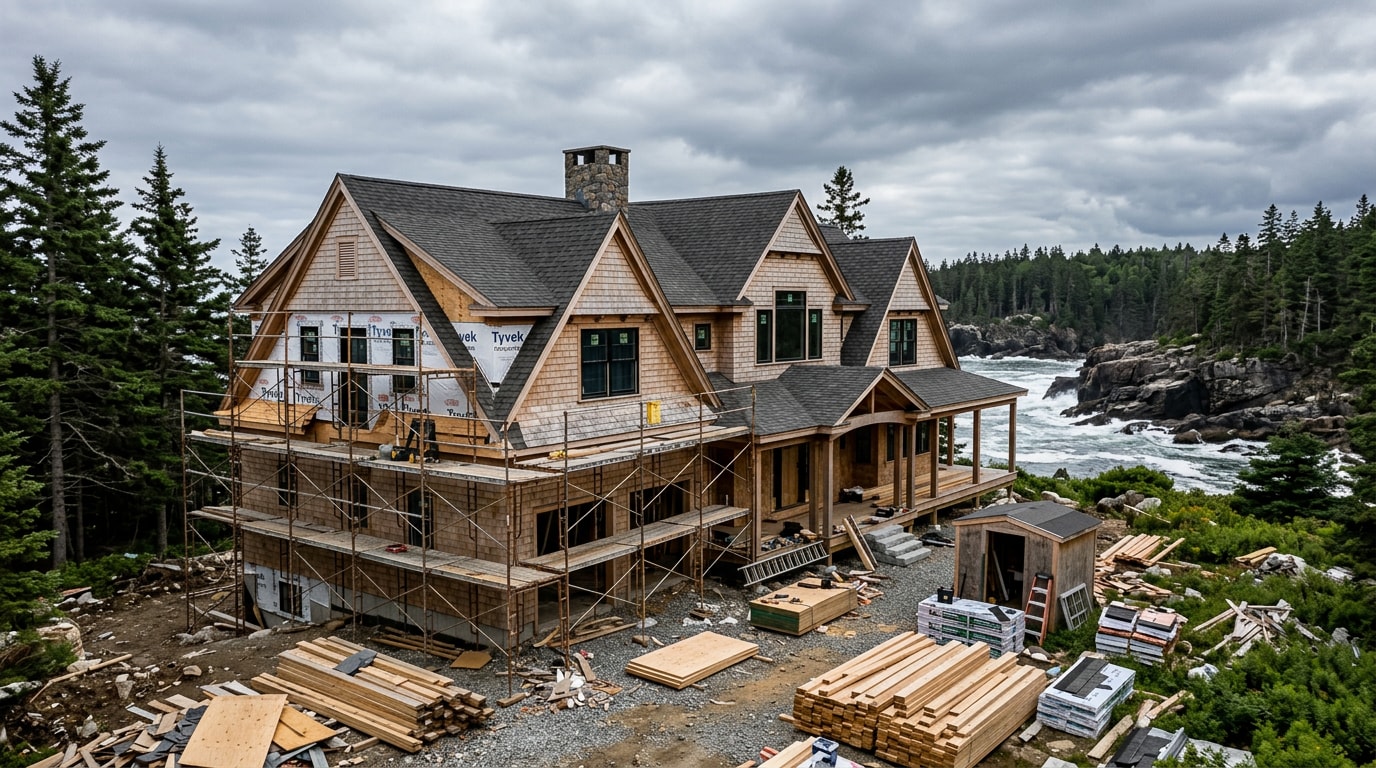
Project builders in Bar Harbor, ME work around a short frost-free season, ledge-heavy lots, and shoreland zoning rules that inland crews rarely deal with. Pick the wrong one and you don't just lose money, you lose an entire building season waiting for a permit redo or a change order fight. Here's the real build process, Maine's current licensing status heading into 2026, and the exact questions that separate a builder worth hiring from one worth skipping.
The Project-Building Process in Bar Harbor, ME
Most builds on Mount Desert Island move through four stages, from the first phone call to the day you get your keys. Knowing what happens at each stage helps you ask sharper questions and catch problems while they're still cheap to fix.
Initial Consultation
The first conversation usually covers site conditions, rough sketches, and an early budget range. Builders use this meeting to size up scope before committing to real numbers.
It's also your chance to gauge availability and communication style before you're locked into a contract. If you're ready to start that conversation, get a free estimate from a local team that already works this coastline.
Phase 1: Pre-Construction
Once scope and budget are roughly aligned, pre-construction planning begins. This phase includes assembling the design team, finalizing concept drawings, pricing subcontractors, and working through town permitting.
On Mount Desert Island, this is also when soil testing and septic design get locked in, since shoreland zoning setbacks and leach field placement can reshape a site plan before a shovel ever moves. A septic system design consultation at this stage catches conflicts early, and lining up site preparation equipment ahead of mobilization keeps the schedule from stalling later.
A detailed cost estimate, schedule, and signed contract typically come out of this stage. Changes made on paper cost far less than changes made mid-build.
Phase 2: Construction
Site mobilization kicks off the construction phase: equipment arrives, utilities get set, and the crew starts following the pre-construction schedule. Quality control checks against plans and specs should happen continuously, not just at milestone inspections.
Mount Desert Island construction has its own rhythm. Ledge is the single biggest line-item surprise homeowners don't budget for, and it shows up on a lot of coastal lots once excavation services start cutting foundation trenches. Short building seasons and weather windows can shift a timeline by weeks, so experienced builders plan buffer time into the schedule instead of promising dates they can't control.

Phase 3: Closeout
Project closeout wraps up loose ends: punch lists, operation manuals, and a walkthrough of how major systems work. This is also when exterior finish work, like paver patios, stone walkways, or retaining walls from the landscaping supply store lineup, gets its final inspection alongside the house itself.
The final walkthrough is when you confirm every contract item is complete and request warranty paperwork in writing. A clear home warranty, even a simple one-year workmanship warranty, gives you a path to resolution if something surfaces after move-in.

Maine Contractor Licensing Rules in 2026: What Actually Changed
Maine's licensing rules surprise a lot of homeowners, because they're looser than almost every neighboring state, and a 2026 vote kept it that way for now.
There Is Still No Statewide License, and the Bill That Would Change That Just Died
Maine currently has no statewide general contractor license, so most builders can legally operate without one. Specific trades, plumbing, electrical work, and manufactured or modular home installation, do require individual state licenses regardless of who the general contractor is.
For more than a year, homeowners and reporters were told that was about to change. LD 1226, the Home Contractor Licensing Act, passed both chambers of the Maine Legislature and would have required registration for residential projects over $15,000 starting January 1, 2027. It never got there. The bill died on adjournment on April 29, 2026 , when lawmakers failed to fund the new licensing board before the session ended.
That means there's no statewide registration coming in 2027, and no firm timeline for when, or if, the Legislature tries again. For the current structure and the bill's final status, see the Maine Legislature's official bill page for LD 1226.
Licensing, Bonding, and Insurance: What to Verify Before You Sign
Because Maine doesn't require a general contractor license, insurance becomes your main protection. An uninsured contractor injured on your property, or whose work damages a neighbor's structure, can leave you holding the liability risk.
Maine does require a written contract for any home construction job over $3,000, and it's worth seeking referrals from trusted sources and checking references before you ever get to the contract stage. The Maine Attorney General's office also notes that its Consumer Mediation Program receives more complaints about contractors than any other category of business , which is exactly why the paperwork matters more here than in licensed states. Full details are on the Maine Attorney General's home construction contracts page.
Before signing, ask for proof that the builder is bonded and insured, including active workers' compensation coverage for their crew. The Surety & Fidelity Association of America is a nonprofit trade association that promotes the value of surety and fidelity bonding and its protections , and a performance or payment bond specifically protects homeowners if a contractor fails to finish work or pay subcontractors. See SFAA's surety and fidelity overview for how bonds function.
If you're building anywhere in Hancock County, including Bar Harbor itself, this insurance-and-references check is doing the job a license would normally do elsewhere.
What Project Builders Actually Cost in 2026
National data gives you a baseline, even though Down East Maine has its own cost drivers: ledge excavation, barge or ferry-dependent material delivery for island sites, and a compressed build season that concentrates demand into fewer months.
The average single-family home sales price in the 2024 NAHB Construction Cost Survey is $665,298 , and total construction cost made up $428,215, or 64.4% of that price . For custom, contractor-built homes specifically, the median price was $166 per square foot of floor space in 2024, up slightly from $162 in 2023 , according to NAHB's analysis.
| Build Stage | Average Cost (NAHB 2024 Survey) | Share of Total Construction Cost |
|---|---|---|
| Site work | $32,719 | 7.6% |
| Foundation | $44,748 | 10.5% |
| Framing | $70,982 | 16.6% |
| Exterior finishes | $57,510 | 13.4% |
| Major systems rough-in | $82,319 | 19.2% |
| Interior finishes | $103,391 | 24.1% |
Source: National Association of Home Builders, Cost of Constructing a Home survey
These are national figures, not Bar Harbor-specific numbers, so treat them as a planning baseline rather than a quote. For a more detailed walk-through of how these categories play out on a Maine build, see our cost to build a custom home in Orono, ME guide. Get a project-specific estimate from a local builder before you budget off averages alone.
Questions to Ask Before Hiring a Builder or General Contractor
Use these during early calls to compare bids on equal footing, whether you're building new or renovating an existing property.
- What is the exact scope of the project? Scope means every material, fixture, and finish the bid assumes, not just square footage. A vague scope produces a low, attractive bid that balloons once allowances run out. Ask for a written, line-item scope before comparing numbers.
- How will we communicate once work starts? Agree upfront on update frequency, whether site visits need scheduling, and who documents change orders.
- What happens with change orders? On a coastal Maine build, change orders often trace back to weather delays or material lead times. Put every change order in writing, with a price and timeline impact, before work continues.
- Can I see proof of insurance and bonding? Ask for the certificate directly from the insurer, not just a verbal assurance.
- Who pulls the permits, and have you worked with this town before? Shoreland zoning and setback rules vary by municipality, and a builder unfamiliar with local code enforcement can cost you weeks.
Keeping a simple project journal, even just dated photos and notes, protects both sides if a dispute comes up later.

This guide is maintained by the project delivery team at MPS LLC, which handles septic design, site excavation, and landscaping work across Bar Harbor and Hancock County. If you want a second opinion on a scope, a septic layout, or a site plan before you sign anything, contact us directly.
FAQ
What does a general contractor do?
A general contractor coordinates every piece of a construction project: pre-construction planning, cost estimates, scheduling, permitting, and subcontractor oversight. They're the single point of contact from the first consultation through closeout.
Do you need a license to be a contractor in Maine?
No. Maine has no statewide general contractor license as of 2026. A bill that would have created one, LD 1226, passed both legislative chambers but died when lawmakers failed to fund it before adjourning on April 29, 2026. Trade licenses for plumbing and electrical work still apply.
How much does it cost to build a house in Maine?
National averages put custom, contractor-built homes at roughly $166 per square foot as of 2024, with total construction cost averaging $428,215 nationally. Maine's coastal and island locations often run higher because of ledge excavation and material transport. Get a project-specific estimate rather than relying on national averages alone.
What questions should I ask a general contractor?
At minimum, ask for proof of insurance and bonding, recent references, a written line-item scope, and clarity on who pulls permits. Put every answer in writing before you sign.
How long does a typical build take on Mount Desert Island?
Timelines vary by project size, but the short frost-free season and weather-dependent site access mean most builders plan buffer weeks into every schedule. Ask your builder directly how they've handled weather delays on past island projects.