OSP construction in Bangor, ME depends on ground conditions long before a single strand of cable gets pulled. Every underground conduit run, handhole, or aerial pole route needs a trench cut, a path cleared, or a stable base graded first, and that's civil site work, not splicing. Here's how that ground-level scope actually gets done on Hancock and Penobscot County terrain, and where it hands off to the licensed telecom crews who finish the build.
What OSP Construction Actually Means
"Outside plant" (OSP) is the physical infrastructure that carries data, voice, and video signals between a provider's network and the buildings it serves. That includes buried conduit, direct-burial fiber, aerial cable on utility poles, handholes, vaults, and equipment cabinets. It's everything outside the four walls of a building, as opposed to "inside plant" work like structured cabling or data center racks.
A full OSP build touches two very different skill sets. One crew clears, trenches, and preps the ground. A separate, licensed telecom crew splices fiber, tests signal loss, and attaches cable to poles under utility-governed make-ready rules. Knowing which contractor does which part saves a project from delays and rework.
Civil Site Work vs. Certified Telecom Work: Where Mariner Property Services Fits
Mariner Property Services (MPS) is a Castine, ME based excavation and property-improvement company, not a BICSI-certified fiber splicing shop. We handle the ground-level scope that every OSP project needs before or alongside the telecom crew's work:
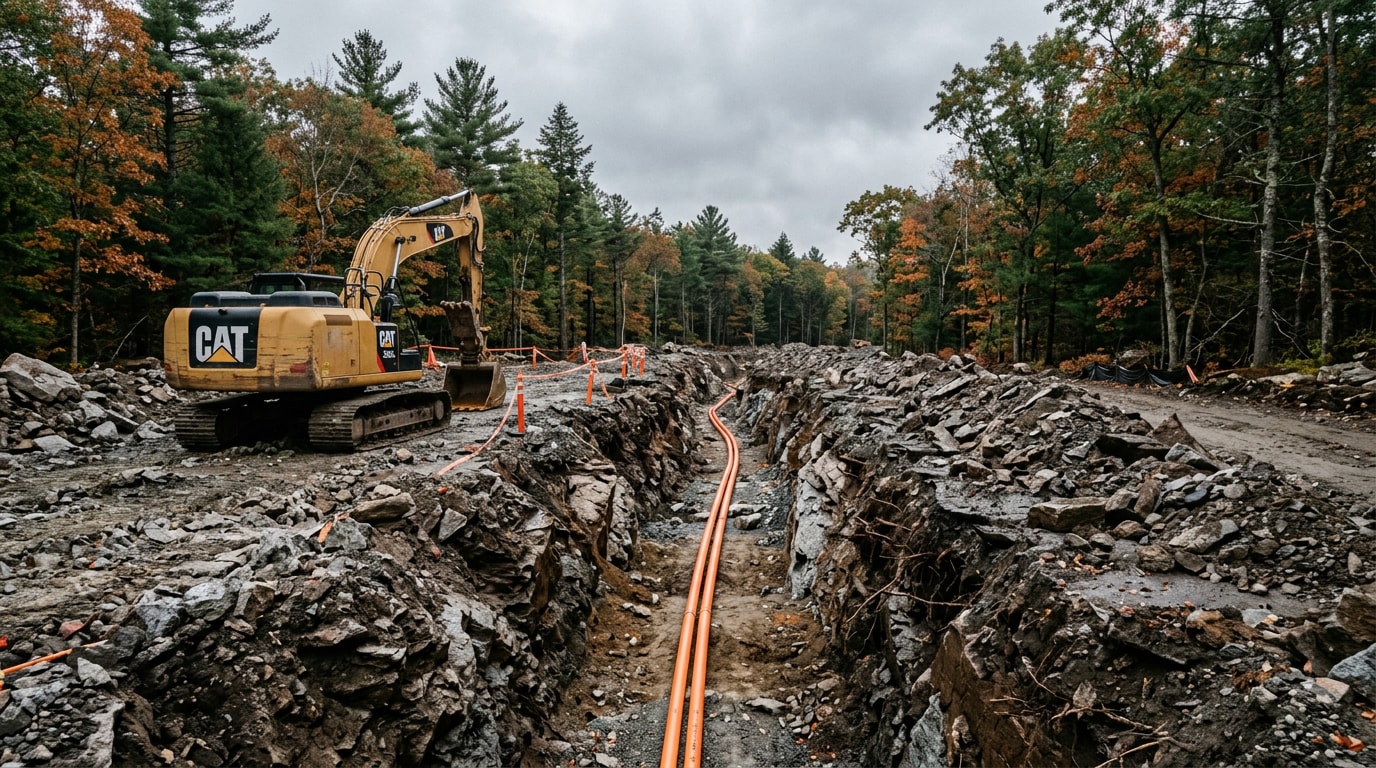
- Trenching and conduit-ready excavation for underground cable routes
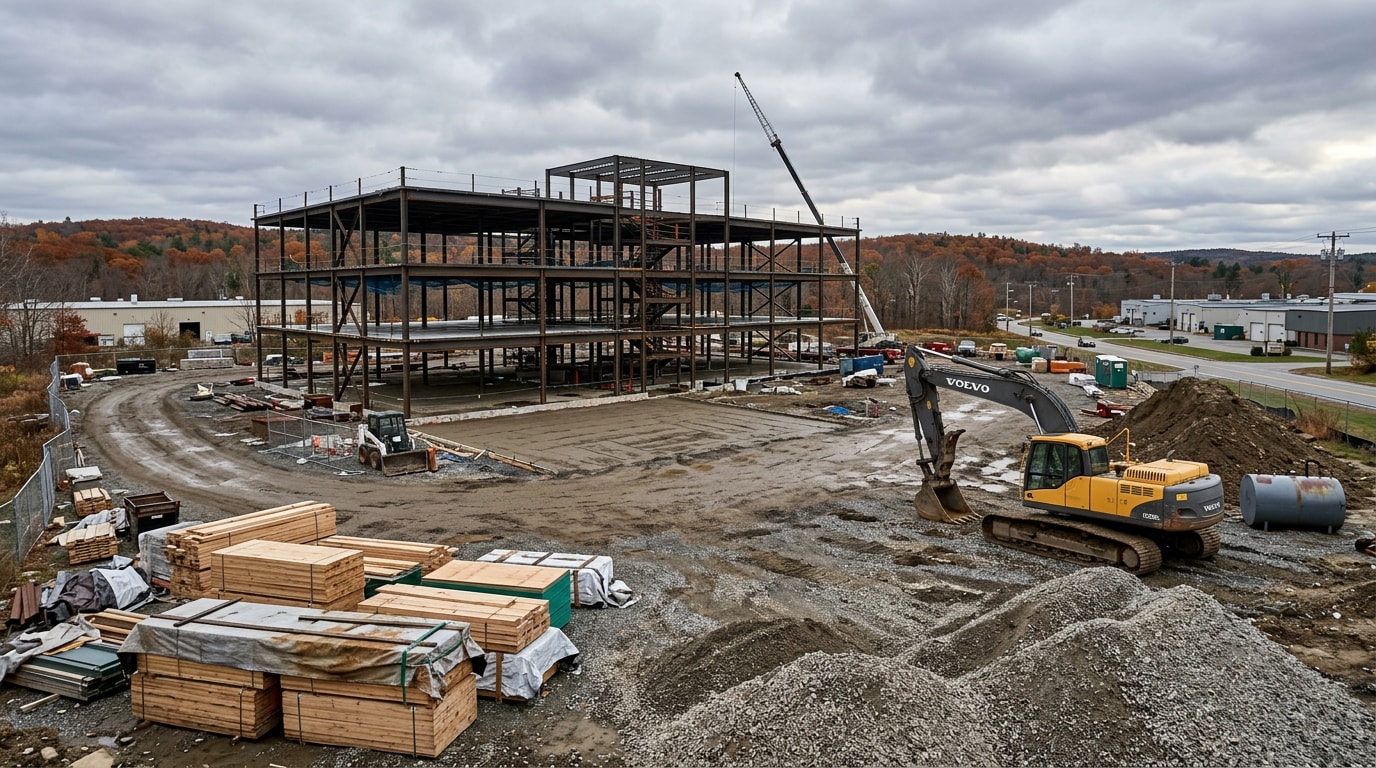
- Site clearing and grading for equipment pads, handholes, and access points
- Gravel access road construction so bucket trucks and bore rigs can reach remote sites
- Material delivery for bedding sand, crushed stone, and backfill
- Drainage and erosion control along disturbed cable corridors
Browse our construction equipment supplier services for the full scope, including excavation services, site preparation equipment, material delivery, and gravel delivery and installation.
Founder Ashton Cushman, a Maine Maritime Academy graduate, started MPS on the idea that hands-on project care and honest scheduling matter more than sales talk. Our crews have cut trench across granite-ledge house lots in Hancock County, where the dig plan changes the moment the bucket hits rock, so we plan excavation equipment and timelines around that reality instead of a generic estimate.
Why Granite Ledge Changes the Plan in the Bangor Area
Shallow bedrock is the defining site condition for any buried infrastructure project in Maine. Compared to many parts of the world, surficial materials in Maine are relatively thin, generally less than 50 feet, and rarely over 100 feet. That sounds deep until you're six inches into a trench and hit ledge, which happens constantly across coastal and central Maine.
The Maine Geological Survey notes that bedrock, or ledge, is commonly encountered in shallow excavation projects, such as digging for foundations or blasting for road construction . For an OSP route, that means a site visit has to confirm whether standard trenching will work, whether the route needs to shift to avoid a ledge outcrop, or whether the telecom contractor will need to switch to aerial construction instead.
Because trenching work involves open excavations, federal safety rules apply regardless of what's being buried. OSHA's trenching standard requires protective systems, safe entry and exit points, and daily inspection by a competent person before crews go below grade. You can review the current requirements on the OSHA trenching and excavation overview.

Make-Ready and Pole Attachment Near Bangor: Who Owns What
If a project calls for aerial construction instead of underground, a different set of rules applies. Pole attachment and make-ready engineering are governed by the pole owner, and in the Bangor area that's almost always Versant Power. Versant Power's service territory spans 10,400 square miles in five counties and is comprised of two service districts, the Bangor Hydro District and the Maine Public District, and the Bangor Hydro District includes Hancock, Piscataquis and Washington Counties and most of Penobscot County.
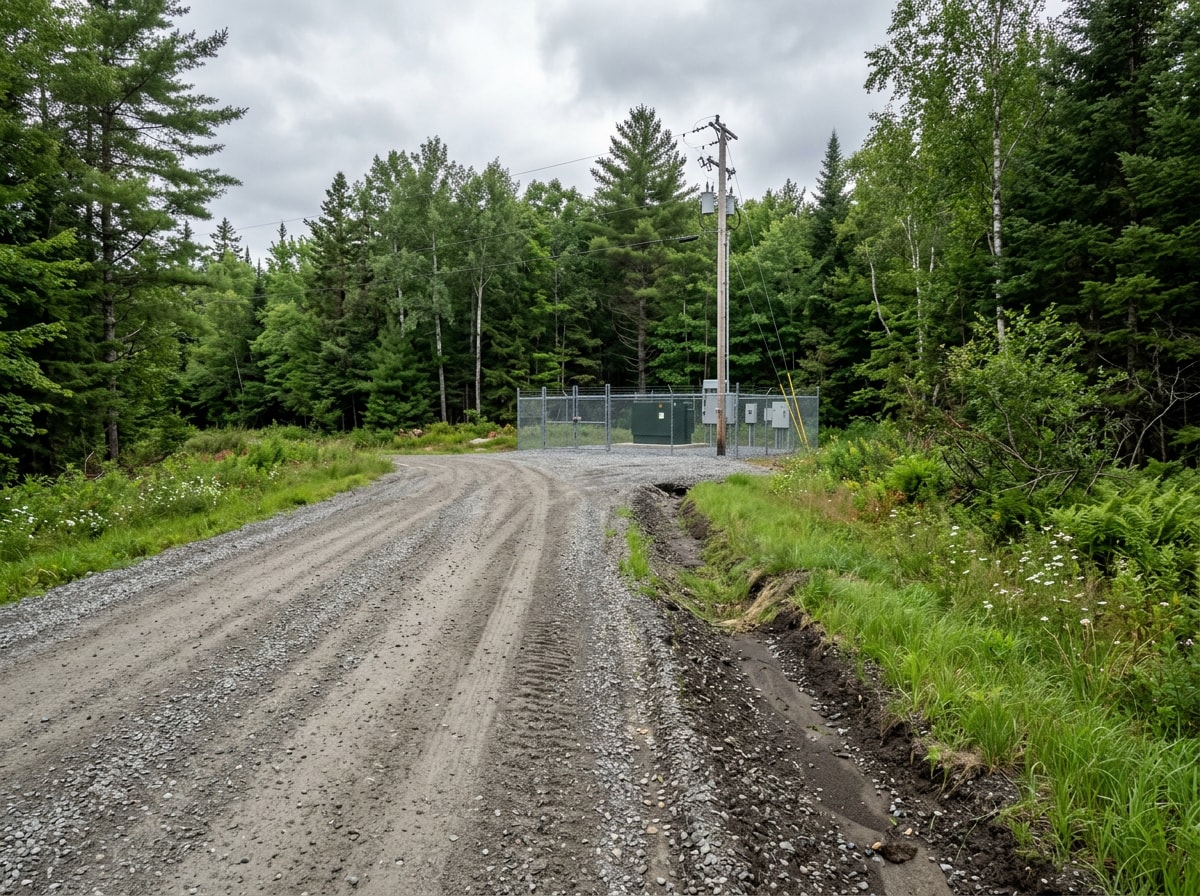
That make-ready process (pole survey, loading analysis, utility approval, and a defined construction window) is handled between the pole owner and the ISP's licensed telecom contractor. MPS doesn't perform pole attachment or splicing. Where we add value is getting the ground ready beforehand: clearing access for bucket trucks, building a stable gravel approach to a pole base, or regrading a soft shoulder so equipment can get in safely.
Drainage and Erosion Control Around OSP Routes
Underground OSP construction disturbs soil along the entire route, not just at the trench itself. Handholes and equipment pads create low spots where water collects. Graded slopes along a cleared right-of-way erode after the first hard rain if nobody plans for it.
That's site work MPS handles directly:
- Grading cable corridors so runoff moves away from vaults and cabinets
- Installing drainage systems around low-lying equipment pads
- Applying erosion control solutions on disturbed slopes before vegetation re-establishes
Skipping this step is a common reason OSP projects get a punch-list call from an inspector months after the cable is already buried.
Civil Site Work vs. Certified OSP Work: Who Does What
| Task | Typically Handled By |
|---|---|
| Site clearing, grading, access roads | Civil/excavation contractor (MPS) |
| Trenching for conduit and buried fiber | Civil/excavation contractor (MPS) |
| Gravel, bedding sand, backfill delivery | Civil/excavation contractor (MPS) |
| Drainage and erosion control along the route | Civil/excavation contractor (MPS) |
| Pole loading analysis and make-ready approval | Pole owner (Versant Power / CMP) |
| Fiber splicing, testing, termination | Licensed telecom/OSP contractor |
| Aerial cable lashing and attachment | Licensed telecom/OSP contractor |
Maine's Broadband Build-Out Is Accelerating in 2026
The site-work demand around Bangor isn't theoretical. Maine's broadband expansion has been moving through several funding rounds, and the state's BEAD program recently cleared a major milestone. With these results, MCA is pleased to release Maine's BEAD Final Proposal, outlining 25 projects with 6 ISP partners and technologies that are 85% fiber. You can track award locations and project status on the Maine Connectivity Authority's BEAD planning page.
That means more fiber route planning, more trenching, and more site prep work across Hancock and Penobscot County in the next few construction seasons, whether the build is a subdivision overbuild, a rural extension, or a commercial property getting new service.
How to Plan OSP Site Work for a Bangor-Area Project
- Confirm the route first. Walk the proposed path before any trenching starts, and flag visible ledge, wetlands, or steep grades.
- Decide underground vs. aerial early. Ledge depth and cost per foot usually make this call, not preference.
- Line up the civil crew and the telecom crew separately. One company rarely does both well; keep clear scope boundaries in the contract.
- Budget extra lead time for make-ready. Pole owner approval timelines vary and are outside the site-work contractor's control.
- Plan drainage before backfilling. It's far cheaper to grade correctly once than to fix erosion after the fact.
Serving Bangor and the Surrounding Region
MPS works OSP-adjacent site prep, access road, and drainage projects across Bangor, ME and the rest of Hancock County. If your project also involves commercial site work, septic coordination, or broader civil construction near Ellsworth, our breakdown of commercial general contracting, site work, and septic requirements in Ellsworth covers a lot of the same permitting and site-prep ground.
You can see our full range of capabilities on the MPS homepage, including lawn care, septic site preparation, and landscaping supply services that often get bundled into larger property and infrastructure projects.
About Mariner Property Services
Mariner Property Services is a family-owned excavation and property-improvement company based in Castine, ME, founded by Ashton Cushman, a Maine Maritime Academy graduate. The crew works hands-on across Hancock and Penobscot County, including Bangor, on excavation, site prep, drainage, and material delivery projects. Contact us to talk through the civil scope of your next project and get a free estimate.
FAQ
What is OSP construction?
OSP, or outside plant, construction is the installation of the physical infrastructure, fiber optic cable, conduit, poles, and cabinets, that carries data outside of a building between a network's core and its end users. It includes both underground and aerial work.
Does Mariner Property Services perform fiber splicing or aerial cable attachment?
No. MPS handles the civil site-work side of OSP projects, excavation, trenching, gravel access, drainage, and erosion control. Splicing, testing, and pole attachment require a licensed telecom OSP contractor and, for aerial work, pole owner approval.
Why does granite ledge matter for OSP construction near Bangor?
Bedrock in much of Maine sits close to the surface, which can stop standard trenching equipment within inches of grade. A site visit before design locks in the route avoids a costly mid-project switch to boring or aerial construction.
Who owns the utility poles used for aerial fiber near Bangor?
Versant Power owns most poles in the Bangor Hydro District, which covers Hancock, Piscataquis, and Washington Counties and most of Penobscot County. Pole attachment requires the pole owner's make-ready approval before any new cable goes up.
How much lead time should I budget for site work ahead of an OSP build?
Plan for a site visit and route confirmation weeks before construction, especially if ledge, wetlands, or drainage issues are likely. Make-ready approval from the pole owner, which is separate from civil site work, can add its own lead time on aerial projects.
Do I need a permit for trenching or excavation work in the Bangor area?
Permit requirements vary by municipality and by whether the work crosses a right-of-way. Checking locally before digging, and calling in utility locates, is standard practice and required under federal excavation safety rules.